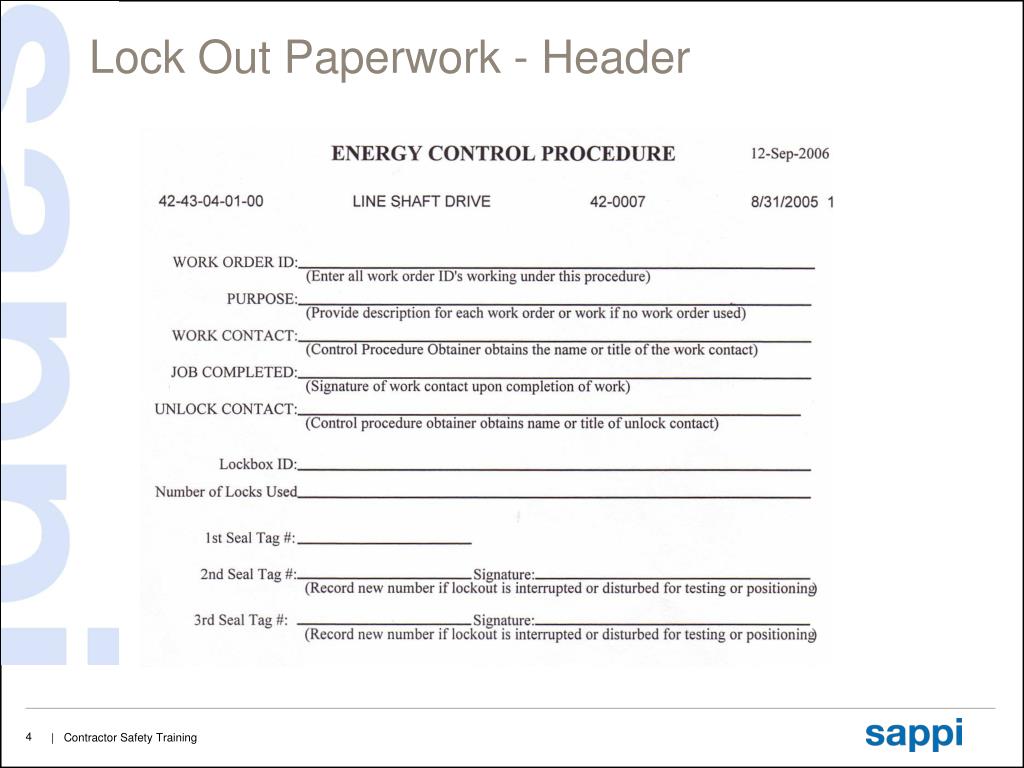
Missing or incorrect lock out tag out paperwork isn’t just a clerical oversight—it’s a direct threat to worker safety and regulatory compliance. When machinery isn’t properly de-energized and documented, the risk of catastrophic injury rises sharply. Despite its critical role, LOTO paperwork is often treated as an afterthought: hastily filled, poorly stored, or ignored altogether. That’s a dangerous mistake.
True safety doesn’t start with the lock—it starts with the record. Every lock, tag, and release must be documented. This documentation is more than a formality; it’s a legal requirement under OSHA 1910.147 and a vital tool for preventing accidental startups during maintenance. Companies that treat LOTO paperwork as a procedural burden, rather than a protective system, open themselves to fines, injuries, and operational downtime.
Let’s break down what effective lock out tag out paperwork really looks like—beyond the checkbox.
Why Lock Out Tag Out Paperwork Matters More Than You Think
Paperwork in safety-critical environments is never just about compliance. In LOTO procedures, documentation serves three essential functions:
- Accountability: Who applied the lock? Who removed it? Paper trails trace responsibility.
- Clarity: Detailed records ensure that all energy sources are identified and addressed.
- Continuity: Shift changes, contractor work, or emergency interruptions depend on accurate logs.
A 2022 OSHA report found that nearly 30% of LOTO violations stemmed from missing, incomplete, or illegible documentation. In one case, a technician was severely injured when a machine restarted during servicing—because the previous shift’s lockout wasn’t properly recorded, and the lock was assumed to be decorative.
LOTO isn’t a one-person job. It’s a team effort backed by clear, accessible records. Without proper paperwork, even a correctly applied lock becomes meaningless.
What Should Be Included in LOTO Paperwork?
A strong LOTO document isn’t a single form—it’s a system of forms and logs designed to cover every phase of energy control. Key components include:
1. Equipment-Specific Lockout Procedures Each machine or system must have a documented energy control procedure detailing: - Type and magnitude of energy sources (electrical, hydraulic, pneumatic, chemical, etc.) - Step-by-step shutdown, isolation, and lock application process - Location of energy-isolating devices - Verification method for zero energy state
Example: A hydraulic press may require electrical disconnection, pressure release from accumulators, and mechanical blocking. Each step must be documented and verified.
2. Lockout Log or Daily Register A chronological log tracking:
- Date and time of lock application
- Name and ID of authorized employee
- Equipment ID or location
- Reason for lockout
- Time and signature upon removal
This log is often reviewed daily by supervisors and audited quarterly.
3. Group Lockout/Tagout Sheets
When multiple workers service one machine, a group lockout form ensures: - Each worker applies their own lock - A primary coordinator is designated - All locks are accounted for before re-energizing
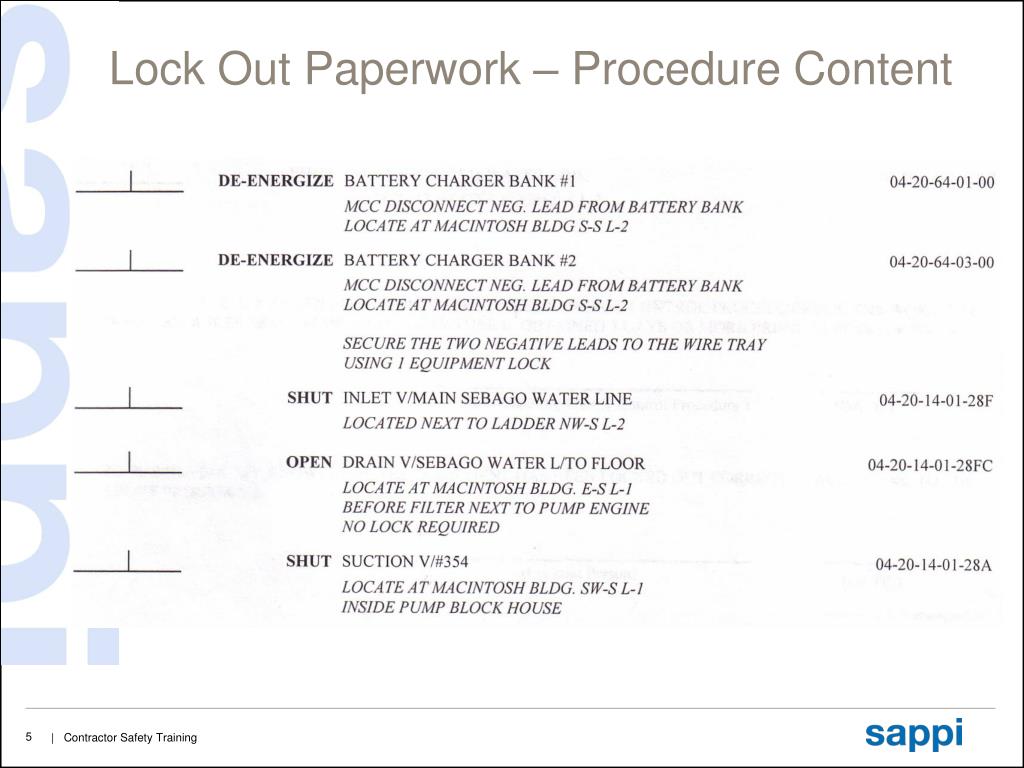
Example: During a conveyor line overhaul, five technicians each apply locks. The group log confirms all five have removed their locks before restart.
4. Contractor Notification Forms Third-party workers must be informed of site-specific LOTO procedures. Documentation includes: - Proof of training verification - Acknowledgment of site rules - Coordination with internal authorized employees
Failure here is a common OSHA citation. One refinery paid a $72,000 fine after a contractor bypassed LOTO—because no formal handoff documentation existed.
Common LOTO Paperwork Mistakes (And How to Avoid Them)
Even experienced teams make errors. The most frequent LOTO documentation failures include:
| Mistake | Risk | Solution |
|---|---|---|
| Blank or unsigned forms | No accountability | Implement mandatory sign-offs with date/time stamps |
| Generic procedures | Incomplete energy isolation | Develop machine-specific LOTO plans |
| Lost or disorganized logs | Inability to audit or investigate | Use centralized digital tracking |
| Duplicate lock IDs | Confusion during clearance | Assign unique lock numbers and log them |
| No verification step documented | Assumed safety | Require written confirmation of zero energy state |
One manufacturing plant reduced LOTO incidents by 65% simply by adding a "Verification Signature" line to every form—forcing technicians to prove they tested the equipment before starting work.
Digital vs. Paper-Based LOTO Systems: A Real-World Comparison
The debate isn’t just about convenience—it’s about reliability.
Paper-Based Systems Still common in smaller operations, paper logs are low-cost but prone to damage, loss, and tampering.
Pros: - No technology investment - Simple to use for small teams
Cons: - Difficult to search or audit - Vulnerable to environmental damage (oil, water, heat) - No real-time visibility
Example: A food processing facility lost LOTO records in a refrigeration leak. OSHA issued a citation for lack of documentation—even though locks were properly used.
Digital LOTO Systems Cloud-based platforms are gaining traction for complex or multi-site operations.
Pros: - Real-time access across shifts - Automated alerts and reminders - Audit-ready reporting - Integration with maintenance software
Cons: - Upfront cost and training - Requires reliable connectivity
Many larger companies now use digital LOTO apps that generate QR codes for each lock. Scanning the code pulls up the full lockout record, responsible technician, and expected duration.
The shift isn’t mandatory—but it’s strategic. Companies using digital LOTO report 40% faster lockout turnaround and 90% fewer documentation gaps.
Top 5 LOTO Documentation Tools and Platforms For teams ready to modernize, here are five proven solutions:
- SafeSite Facility
- - Cloud-based LOTO and safety compliance platform
- - Features digital lockout logs, procedure builder, and audit trails
- - Best for: Mid to large industrial sites
- LockOut TagOut.com (by Brady)
- - Offers customizable templates and printable forms
- - Includes procedure kits and lock management tools
- - Best for: Small to mid-sized operations needing quick setup
- Failsafe LOTO
- - Mobile app with real-time lock tracking and notifications
- - Supports group lockout and shift handover logs
- - Best for: Facilities with mobile maintenance teams

- iAuditor by SafetyCulture
- - General inspection tool adaptable for LOTO audits
- - Allows photo documentation and instant reporting
- - Best for: Companies already using SafetyCulture ecosystem
- EHS Insight
- - Enterprise-level EHS software with integrated LOTO modules
- - Custom workflows, training tracking, and incident linkage
- - Best for: Large organizations with multi-site compliance needs
Each tool reduces paperwork errors—but only if paired with proper training and enforcement.
How to Audit Your LOTO Paperwork Effectively
An audit isn’t just a compliance exercise—it’s a safety diagnostic.
Conduct quarterly LOTO documentation audits using this checklist:
- [ ] Are all active lockouts logged with name, time, and equipment?
- [ ] Are machine-specific procedures up to date and accessible?
- [ ] Are group lockout forms complete and signed?
- [ ] Is there evidence of energy isolation verification?
- [ ] Are expired or overdue lockouts flagged?
- [ ] Are contractor forms on file?
One chemical plant discovered that 18% of lockouts exceeded 8 hours without justification. The audit led to revised procedures requiring supervisor approval for extended lockouts—reducing fatigue-related risks.
Audits should be unannounced and include random form reviews. Findings must be shared with teams—not to punish, but to improve.
Real-World Use Case: How a Brewery Prevented a Disaster
At a regional craft brewery, a technician began cleaning a pasteurizer without realizing a lock from the previous night’s shift was still in place. The machine hadn’t been properly logged.
Thankfully, the supervisor noticed the discrepancy in the LOTO register—two entries for the same equipment, eight hours apart. The second technician was stopped before opening the unit.
Post-incident review revealed: - The first technician had applied the lock but forgot to log it - The form was later filled out retroactively—creating confusion
The brewery responded by: - Switching to a digital LOTO system with mandatory log entry before lock application - Adding a 15-second verification video step for high-risk equipment - Training all staff on the “Log First, Lock Second” rule
No injuries occurred—but the near-miss exposed how fragile paper-based systems can be.
Streamline Your LOTO Paperwork—Without Sacrificing Safety
Effective LOTO paperwork doesn’t have to be cumbersome. The goal isn’t more forms—it’s smarter documentation.
- Start with these steps:
- Map your critical equipment and develop specific procedures for each.
- Standardize forms across departments to eliminate confusion.
- Train employees not just on locking, but on logging—make documentation part of the muscle memory.
- Audit regularly and act on findings.
- Consider digital tools if your operation is complex or growing.
Remember: If it isn’t documented, it didn’t happen—at least not in the eyes of OSHA or a liability attorney.
Strong LOTO paperwork isn’t about red tape. It’s about protecting people, ensuring continuity, and proving due diligence when it matters most.
How do you ensure your LOTO paperwork stays accurate and accessible? Start today by reviewing one high-risk machine’s documentation—and fix one gap before the next shift begins.
Frequently Asked Questions
What is the purpose of lock out tag out paperwork? LOTO paperwork ensures that energy control procedures are followed, tracks accountability, and provides a legal record of compliance during maintenance.
Is electronic LOTO documentation OSHA-compliant? Yes, OSHA accepts digital records as long as they are accurate, tamper-proof, and accessible to authorized personnel.
Who is responsible for filling out LOTO forms? Authorized employees performing the servicing are responsible for completing the documentation, including lock application and removal logs.
How long should LOTO records be kept? OSHA recommends retaining records for at least one year, though high-risk industries may keep them longer for liability and audit purposes.
Can multiple people use the same LOTO form? Yes, but only with a group lockout procedure that includes individual locks, a designated coordinator, and collective sign-off before re-energizing.
What happens if LOTO paperwork is missing? Missing documentation can lead to OSHA citations, invalidated insurance claims, and increased liability in the event of an accident.
Do contractors need to complete LOTO paperwork? Yes, contractors must follow site-specific LOTO procedures and complete all required forms, including verification and handoff documentation.
FAQ
What should you look for in Lock Out Tag Out Paperwork: What You Need to Know? Focus on relevance, practical value, and how well the solution matches real user intent.
Is Lock Out Tag Out Paperwork: What
You Need to Know suitable for beginners? That depends on the workflow, but a clear step-by-step approach usually makes it easier to start.
How do you compare options around Lock Out Tag Out Paperwork: What You Need to Know? Compare features, trust signals, limitations, pricing, and ease of implementation.
What mistakes should you avoid? Avoid generic choices, weak validation, and decisions based only on marketing claims.
What is the next best step? Shortlist the most relevant options, validate them quickly, and refine from real-world results.


